Everyone learned how to sell at Cannes. Now nobody stands out.
↓ Scroll
Eleven o'clock used to mean something. The Palais would empty out, and the winners, the actual winners, walked into the Carlton like they owned the sidewalk. For one night, the whole town belonged to whoever made the work.
Not this year. The bar was still full at midnight. It just wasn't full of the same people.
Here's the number that matters: for every single person at Cannes who controlled a budget, there were roughly five people trying to sell to them.
That stat is ours, and yes, we made someone count it by hand. Eighteen interviewers, ten locations, 8,023 people stopped and sorted over a week of dodging golf carts and lanyards. Everything else in this report leans on that one figure.
The proprietary number
5:1
The Croisette Ratio
Start with the raw split. Of the 8,023 people we stopped and classified on the ground, 2,768 (34.5%) sit on the seller side of the table: founders, platform executives, agency leads, media and commerce operators, vendors of every stripe. Only 534, or 6.7%, actually sit near a budget: brand-side marketers, CMOs, events leads, agency producers.
Do the math and it's roughly five sellers circling every one buyer. Now tighten it up. Strip out the junior brand titles, the sponsorship-adjacent "events" roles that don't actually buy anything, the producers with zero vendor authority, and the real qualified pool drops to somewhere around 432–433 people. Which, if you're keeping score, makes the ratio worse. Not better. Closer to 6.4 to 1.
The Croisette Ratio
The Croisette, Cannes Lions 2026. Reddit's Community Deli in the foreground. Credit: Cannes Lions International Festival of Creativity / Press Portal, Thomas Niedermueller/Getty Images for Cannes Lions, via MM+M.18
Executive Summary
Five observations
The marketplace finished building itself. Now it's just saturated. Off-Palais programming, branded beaches, villas, all of it grew again this year, sure. But growth stopped being the story a while ago.1
The activation playbook became public domain. Beautiful space. Light branding. Meeting tables, a panel or two, a studied kind of casualness that somebody definitely workshopped. Every brand runs this now, which means square footage doesn't tell you anything anymore.
Exclusivity beat scale this year. And taste beat exclusivity. Funny thing. The week's real winners were running the smallest rooms in town.
Creators stopped being a nice-to-have and became infrastructure, full stop. Cannes made it official by building them their own beach, half welcome mat, half defensive crouch.2
Agencies still mint the status everyone else trades on. That part hasn't changed. What changed is who spends it. The Lions still set the price of the currency. They just don't run the exchange anymore.
Chapter 1
Three eras of Cannes
Let's get the obvious objection out of the way first: yes, Cannes became a marketplace years ago. Everyone already knows that part. Here's what actually changed.
Through ~2015 Awards Festival
The Lions were the point
The whole week orbited the Palais, and nothing else really competed for it. Work premiered. Jurors argued into the night. And at 11PM, the winners walked into the Carlton, not because anyone told them to, but because that's simply where the town's attention already lived.
2016–2024 Market Week
Status minted inside, spent outside
By 2018, trade press already had a name for it: tech companies had "seized the best spots, the beaches."3 Google, Facebook, Spotify, Amazon, plus a whole wave of ad-tech firms (Trade Desk, MediaMath, OpenX, Rubicon) grabbed villas, penthouses, yachts, you name it, while agency and brand footprints quietly shrank. If you're reading this, you probably lived through some version of it yourself. We're not trying to sell you on old news here. This shift is, frankly, dated.
Now Saturated Market
The conversion playbook is public knowledge
Stagwell's Sport Beach is the cleanest marker of what came next. Conceived in the summer of 2022. Launched by June 2023. By 2026, it's a full standalone Stagwell business unit, complete with its own turf pitch and World Cup watch parties.4 The format didn't just succeed. It matured into an entire category. And once every platform, consultancy, publisher, talent agency, and ambitious founder is running the identical beach-plus-stage-plus-demo playbook, well, a beach stops being a beach. It's just a booth with better lighting.
2018: everyone waited for the winners. 2026: everyone was chasing calendar invites.
Chapter 2
Every activation had a business model
Not a ranking. A classification. Ordered from gravity plays to magnetism plays, so the sequence itself argues the thesis.
@msverak_, on the four ways to actually get into Cannes Lions.
Four creators, four takes on the same week. Before the classification, the texture.
Stagwell Sport BeachScale and access
The ESPN of Cannes, except ESPN doesn't charge brands for the privilege of sitting courtside.
What started as Brand Innovators with better athletes has evolved into a standalone media property that now tours the marketing calendar, monetizing executive FOMO from Davos to Cannes. The formula is brutally effective: elite athletes, guaranteed foot traffic, CMOs in polos, ad tech in abundance, and brands paying for proximity to relevance.
In 2026, Sport Beach returned to Plage du Festival with a turf pitch, five-a-side tournaments, and a World Cup watch party backed by Adobe, Diageo, Gatorade, and NBCUniversal.4 It remained the busiest address off the Palais, not because it was the most original, but because it had become the safest bet for attention.
Its competitive advantage isn't programming. It's borrowed gravity. Kevin Durant. Alex Rodriguez. The celebrities create the orbit; marketers mistake it for innovation.
@brappy55, "Sport Beach has become THE PLACE to be during Cannes Lions."
@adweek, on Stagwell Global CMO Ryan Linder: "There's no place like Sport Beach."
Amazon PortOwned-world spectacle
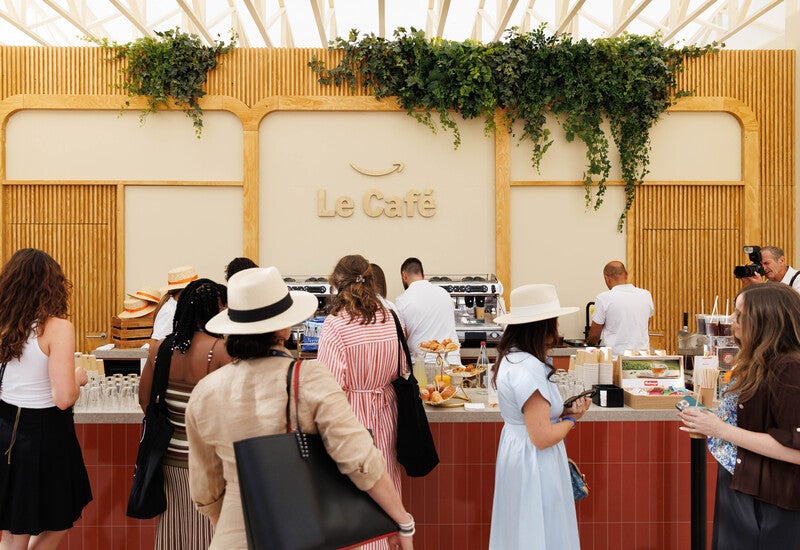
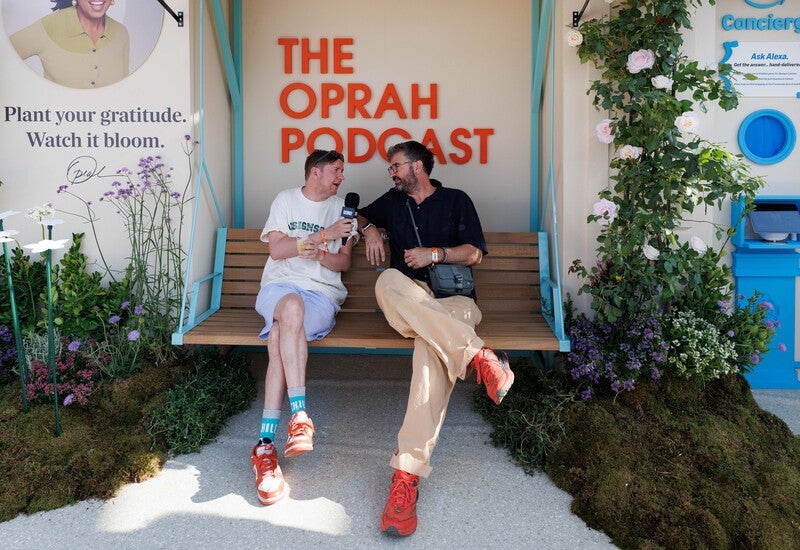
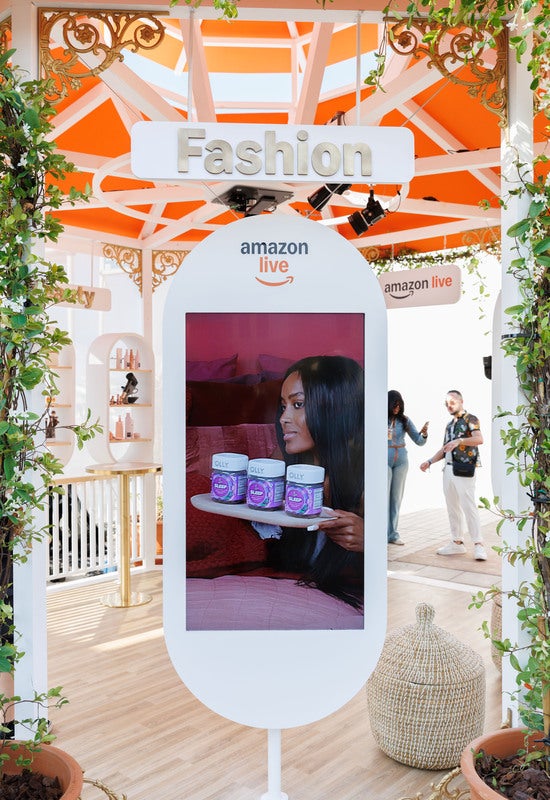
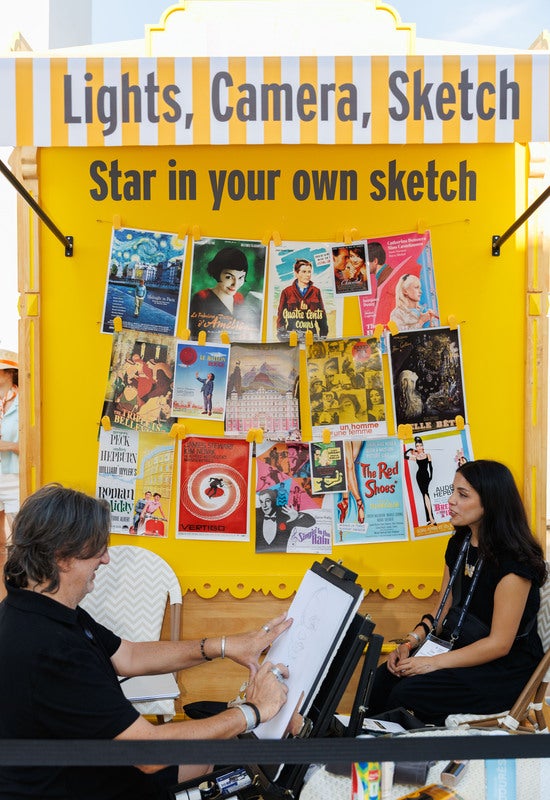
Sport Beach has to borrow its gravity, from athletes, from culture, from somebody else's fame. Amazon skipped that step entirely and just built the whole village itself. Populated it with its own IP, too. Amazon Port came back as a French-village-themed footprint along "Le Boulevard d'Amazon," and it had actual storefronts: Twitch ran an ice cream shop, Prime Video ran a bookshop, Fire TV had a sports pub, IMDb did caricatures (of all things), and Wondery (this one's a little sweet, honestly) ran a gratitude garden. There was even a hidden speakeasy tucked away for campaign-strategy chats.17
The real centerpiece, though, was Rue Visionnaire. Visitors used an AI agent to spin up a fake business from nothing (branding, ops, a whole ad campaign), then earned a physical key that unlocked its "grand opening," complete with a live ad running across Amazon.com, Alexa+, Prime Video, and Twitch, all at once. Main stage speakers ran the gamut: Priyanka Chopra Jonas, Questlove, Kevin Durant, Candace Parker. Oprah showed up too, talking up her Amazon partnership on the main Cannes stage that same week.17
Here's the thing about gravity like this: you don't need anyone else's culture to produce it. You just need five business units and a production budget large enough to make a fake speakeasy feel real.
Le Boulevard d'Amazon and Rue Visionnaire. Photos: courtesy of Amazon, via Event Marketer.17
MetaLiving showroom
Meta skipped the keynote entirely and just let the product be the entertainment. Meta Beach pulled in 15,000-plus visitors in 2026, running hands-on demos of the new Ray-Ban Meta glasses (the Starfire Kylie edition, for what it's worth, sold out on-site) right alongside a Creator Sandbox.5 The staff doubled as personal videographers. Every demo got turned into a finished Reel, shot with Meta's own Edits app, before the visitor even walked out the door.15 There's a lesson buried in there: don't bother telling marketers about the future. Just let them touch it, then hand them a finished piece of content on the way out.
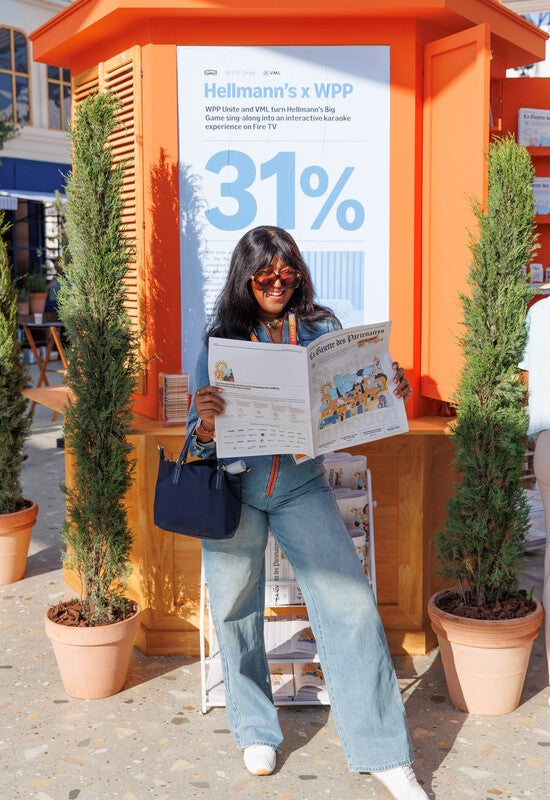
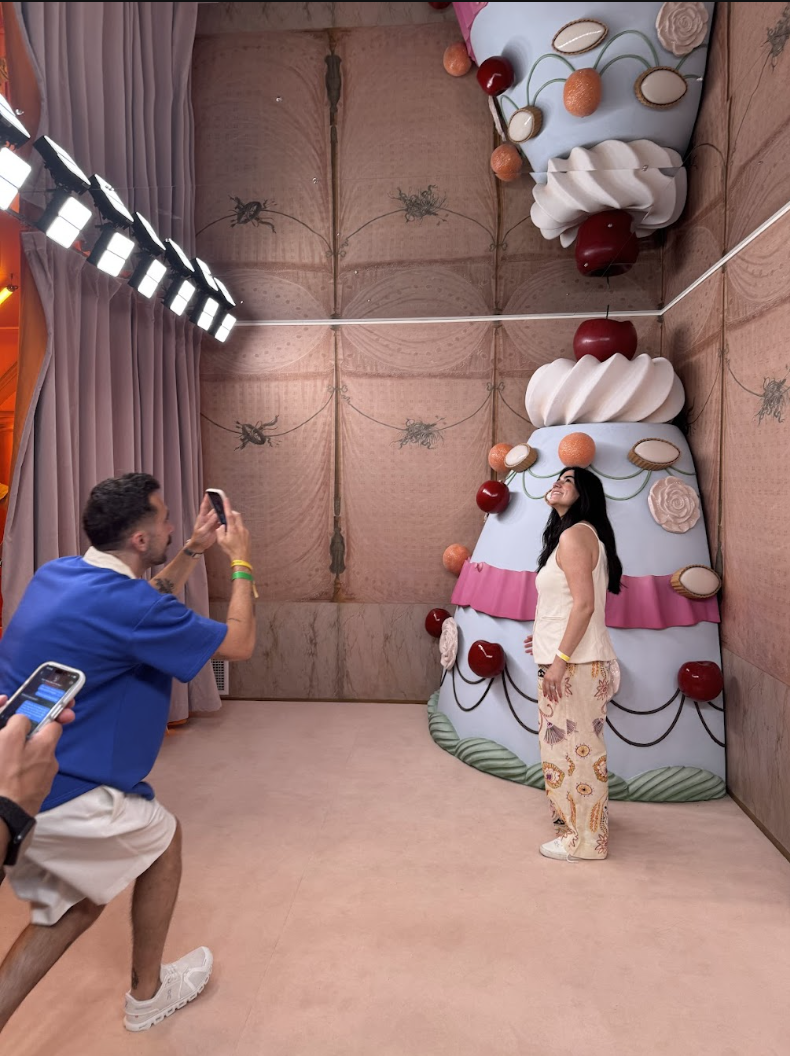
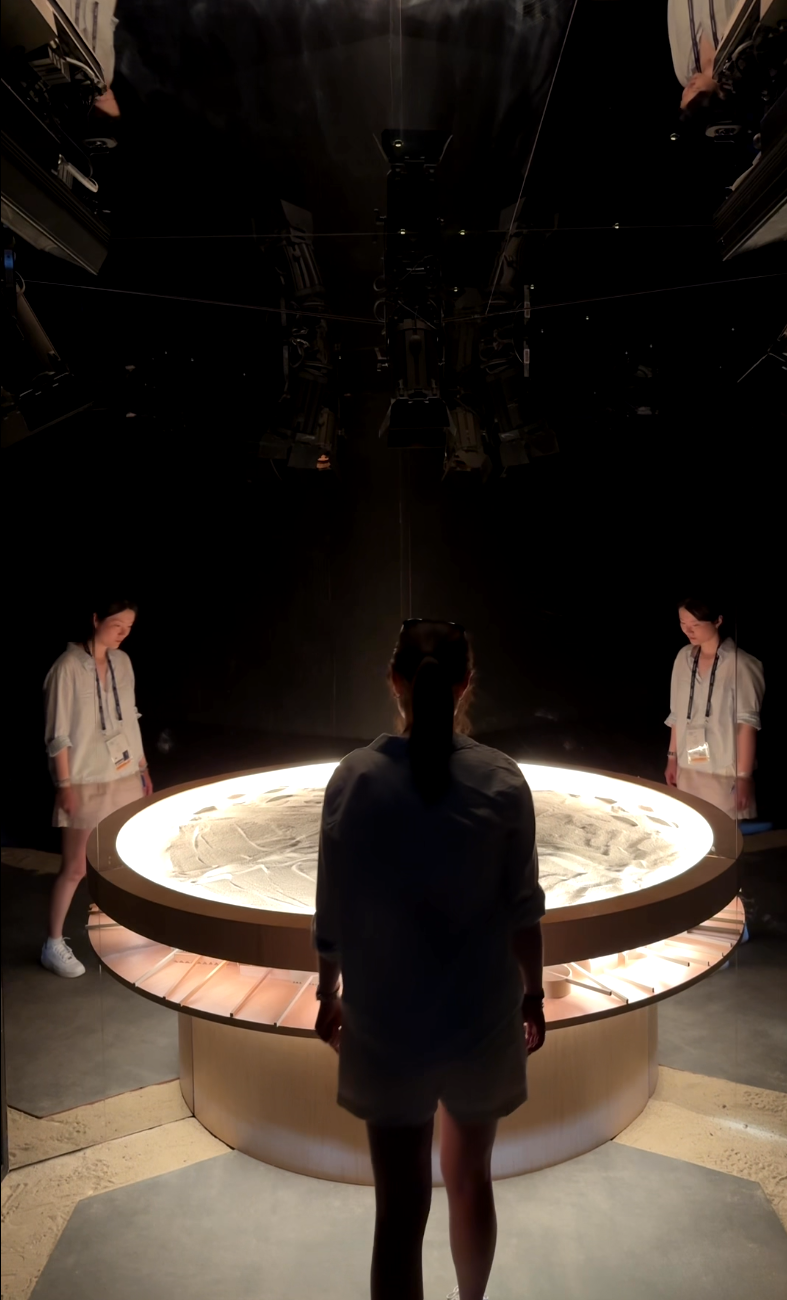
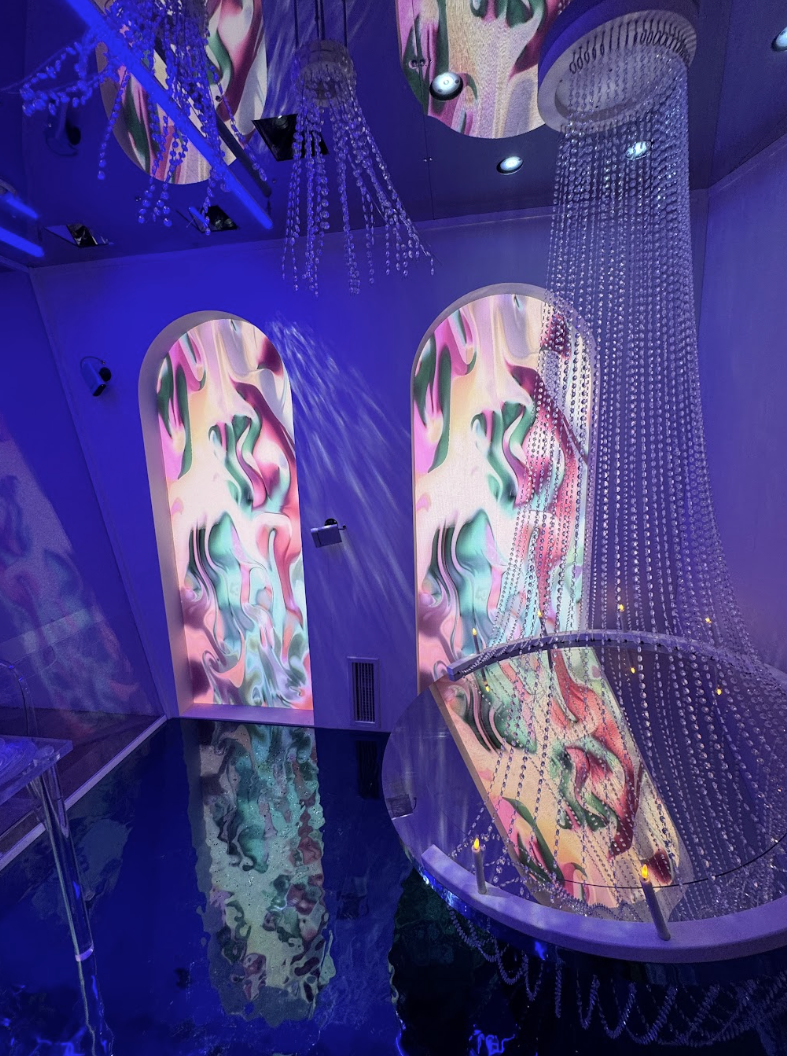
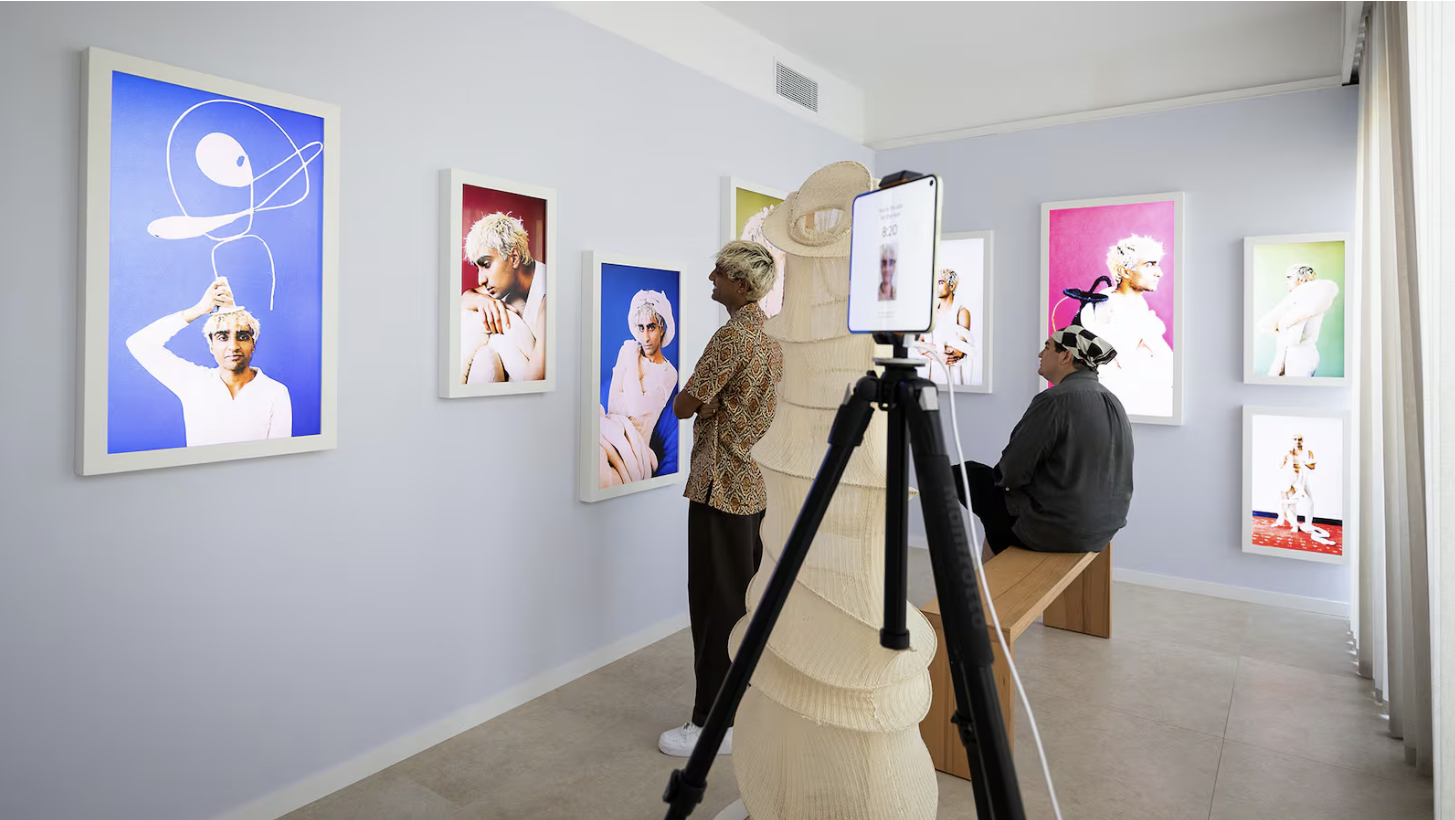
Ten years in, Google Beach tilted even further toward curated, high-level hospitality (private executive meetings, mostly) alongside a brand-new "Google Creative House."6 The centerpiece was Genie 3, Google's real-time AI world-generation model, and it's genuinely a little wild to watch in person: visitors picked a toy, picked a background, snapped a photo, and the thing turned into an explorable, playable world, rendered frame by frame as they walked through it.15 Not everyone gets the same experience at Google Beach. That's not an accident. Google built the floor plan, and yes, the AI demo, specifically to say so.
The Persistence of Memory, generated by Genie 3
The Disintegration of the Persistence of Memory, generated by Genie 3
Delegate Thinking, an AI experiment by the agency Special Guest, presented within Google Creative House.
SpotifyManufactured scarcity
Invite-only, tucked into Palais Stéphanie, one of the smaller footprints on this whole list, actually. Daytime talks by day, then Central Cee, RAYE, and Mumford & Sons taking the stage by night.7 Funny how that works: people remember what they didn't get in to see far longer than they remember what they did.
@wwd, on RAYE performing "Where Is My Husband!" at Spotify Beach.
@consequence, on Mumford & Sons performing "Little Lion Man" on night two of Spotify Beach.
LinkedInBorrowed equity, built out
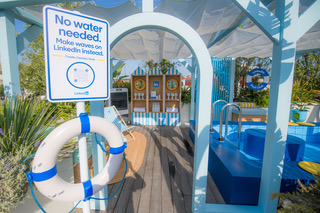
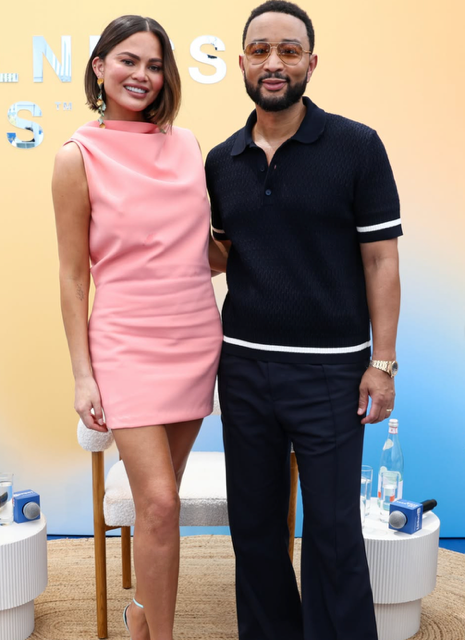
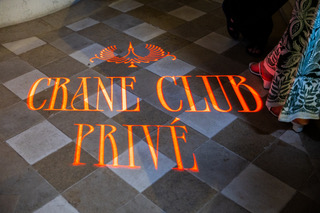
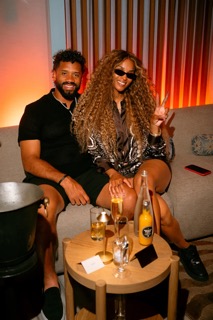
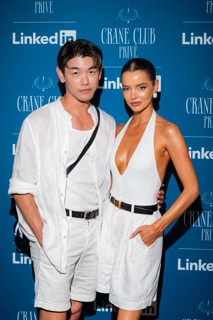
Didn't build a freestanding beach. Took over three floors of a hotel that already had standing, then ran it as two different venues depending on the hour. LinkedIn's largest Cannes presence to date spanned a rooftop hosting Wellness Oasis programming, a penthouse with creator zones, an Adobe Edit Bar, and the LinkedIn Network Exchange, and a Croisette-level lounge that ran a live morning show, The Daily Brief, co-hosted by creator duo Colin & Samir and streamed straight to LinkedIn's own feed.21 Produced by The Bait Shoppe, the space leaned into "LinkedIn Blue," wave motifs, and sun-yellow accents, a Mediterranean café by day. After dark, the same room flipped into Crane Club Privé, a partnership with Tao Group Hospitality that became one of the week's hottest late-night rooms.21 Less square footage than a beach, more relevance by association. And, this year, a lot more built inside it.
The LinkedIn Lounge by day. Photos: courtesy of the Bait Shoppe.
Crane Club Privé, after dark. Photos: courtesy of the Bait Shoppe, the agency behind LinkedIn's Cannes activation.21
GIF courtesy of the Bait Shoppe.
RedditInsight as product
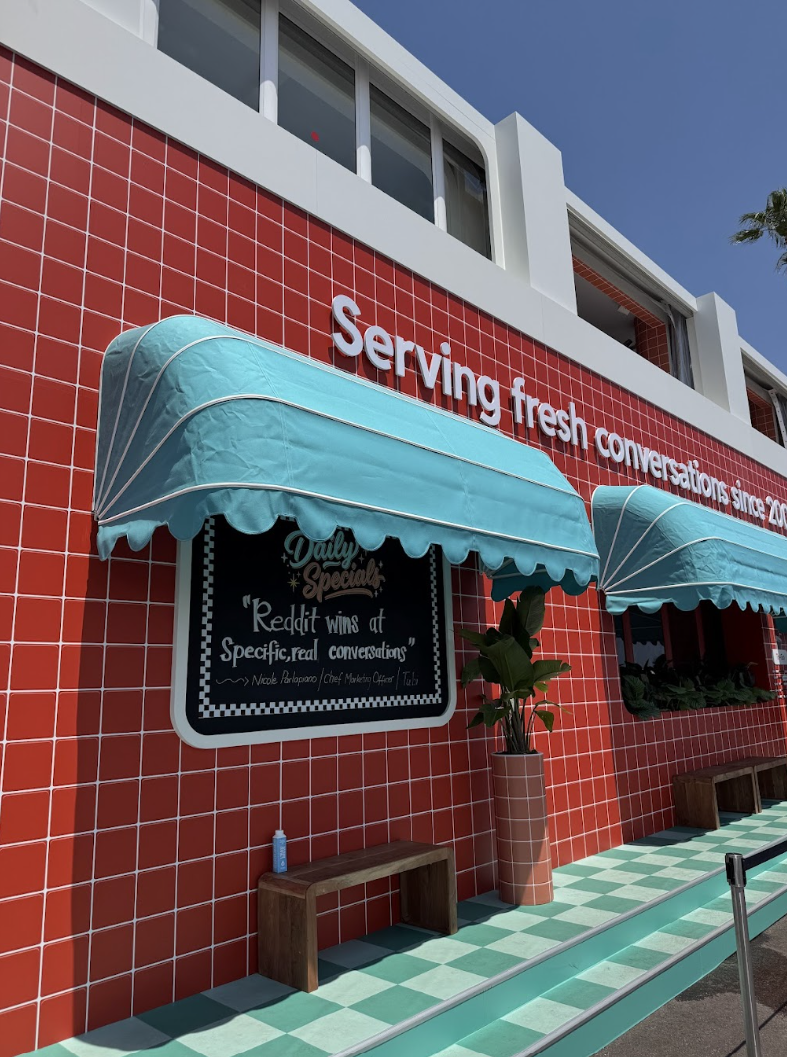
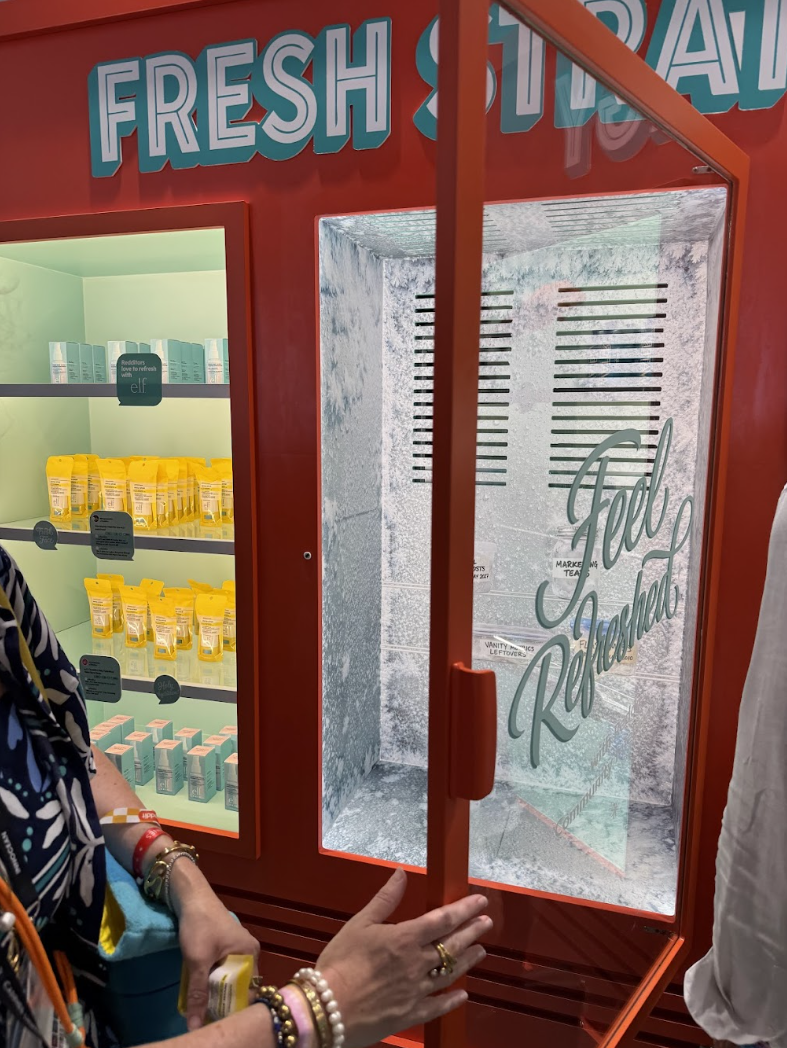
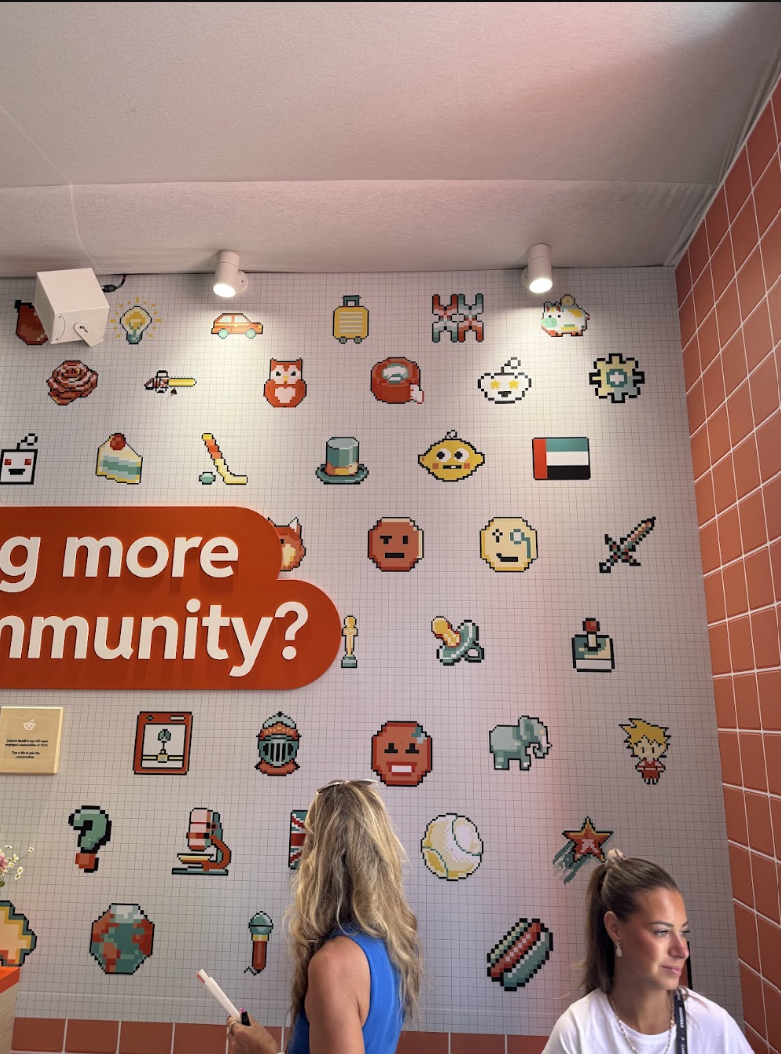
Reddit's two-story Community Deli started from a genuinely simple read that HQ handed the team: nearly every brand house at Cannes serves drinks, almost none of them serve food. So this one had an actual working deli counter: sandwiches built around your personal interests, a Sweet Success candy aisle, even a hard soda bar.15 Wall decals tied to the platform's top 100 most active subreddits let visitors scan straight into a live community discussion. A second-floor Conversation Studio ran programming all week. And everyone walked out with a fresh flower, because, as the team put it, "giving someone their flowers."15 There was also, somewhat randomly, a walk-in freezer where you could cool off from the heat while standing among boxes of the creative team's discarded ideas. It wasn't about scale. It wasn't even really about taste. It was the same instinct that makes Reddit's ad product work in the first place: listen to what people actually want instead of performing what a beach is supposed to look like.
"Deli culture on @reddit is up 4x." Via VaynerX.
Reddit Deli, the freezer, and the NFC pixel-art wall: hyz studio.15 Community Deli walkthrough video and additional detail: Event Marketer.17
COLLINS HouseTaste as positioning
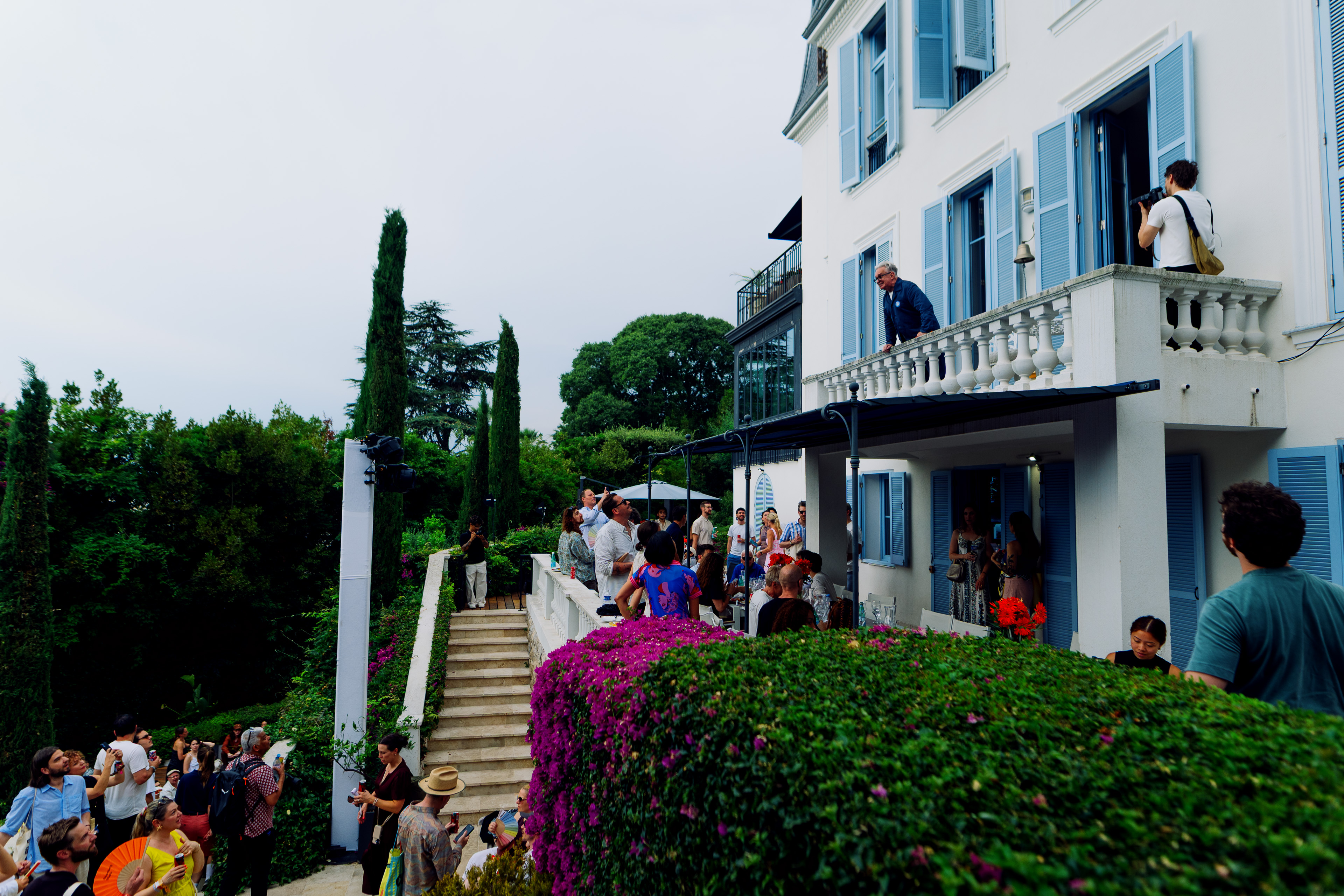
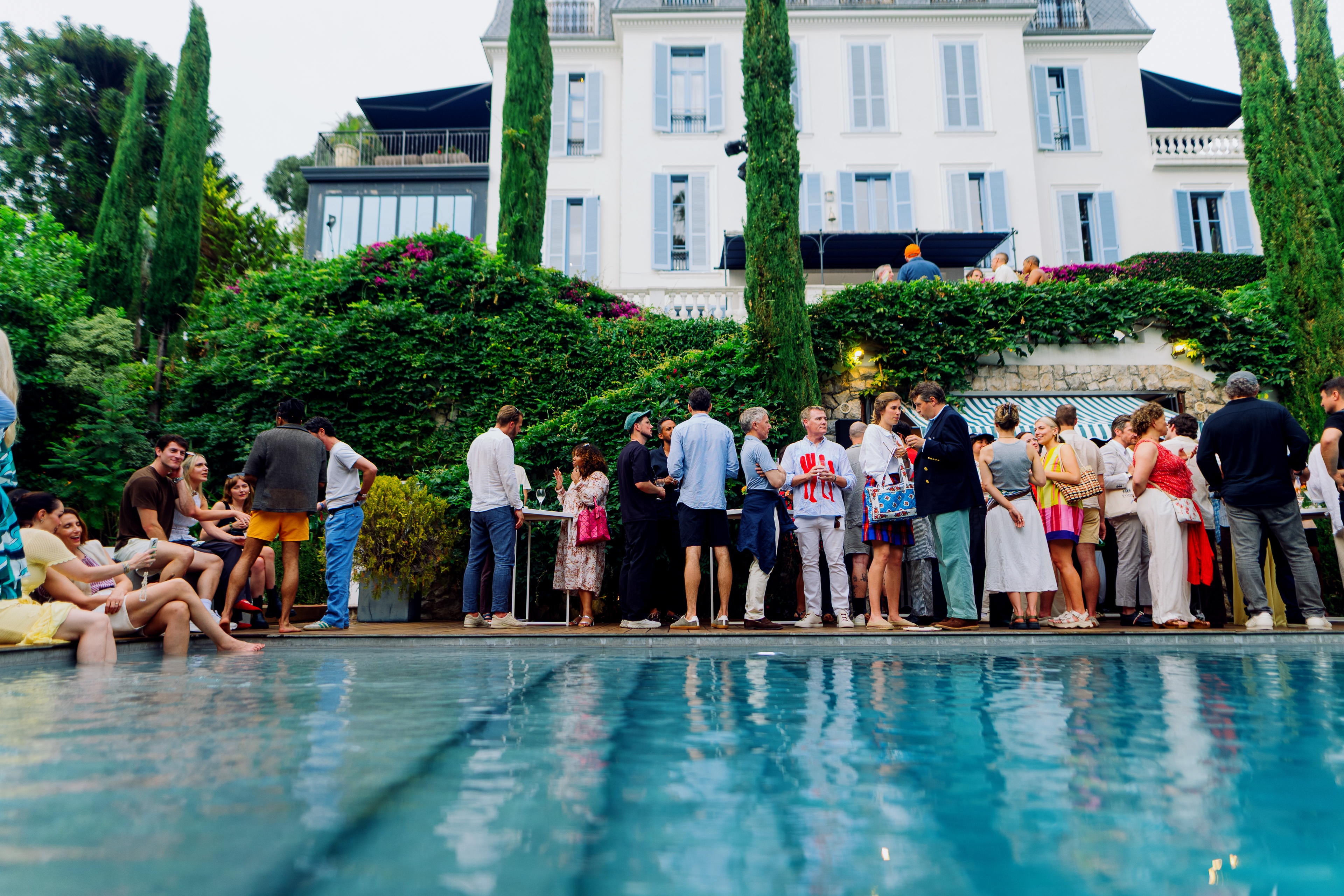
No lanyards. No LED walls. No “presented by.” Just an 1855 château perched above the Croisette, where the signal-to-noise ratio was intentionally inverted. If Sport Beach monetized attention, COLLINS House monetized taste.8
Founded by Brian Collins as an antidote to what Cannes had become, the premise was almost unfashionably simple: invite curious people, keep the crowd small, and trust that good conversations compound. By 2026, what began as a three-day experiment had evolved into a year-round platform extending into Tribeca, Art Basel, Formula 1 weekends, and other cultural moments where commerce quietly follows creativity.8
Brands didn't show up to dominate the room. They showed up hoping not to look like they were trying. The currency wasn't celebrity. It was curation. CEOs traded ideas with artists, founders with students, CMOs with designers. The house was proof that exclusivity isn't about velvet ropes; it's about having something worth saying.
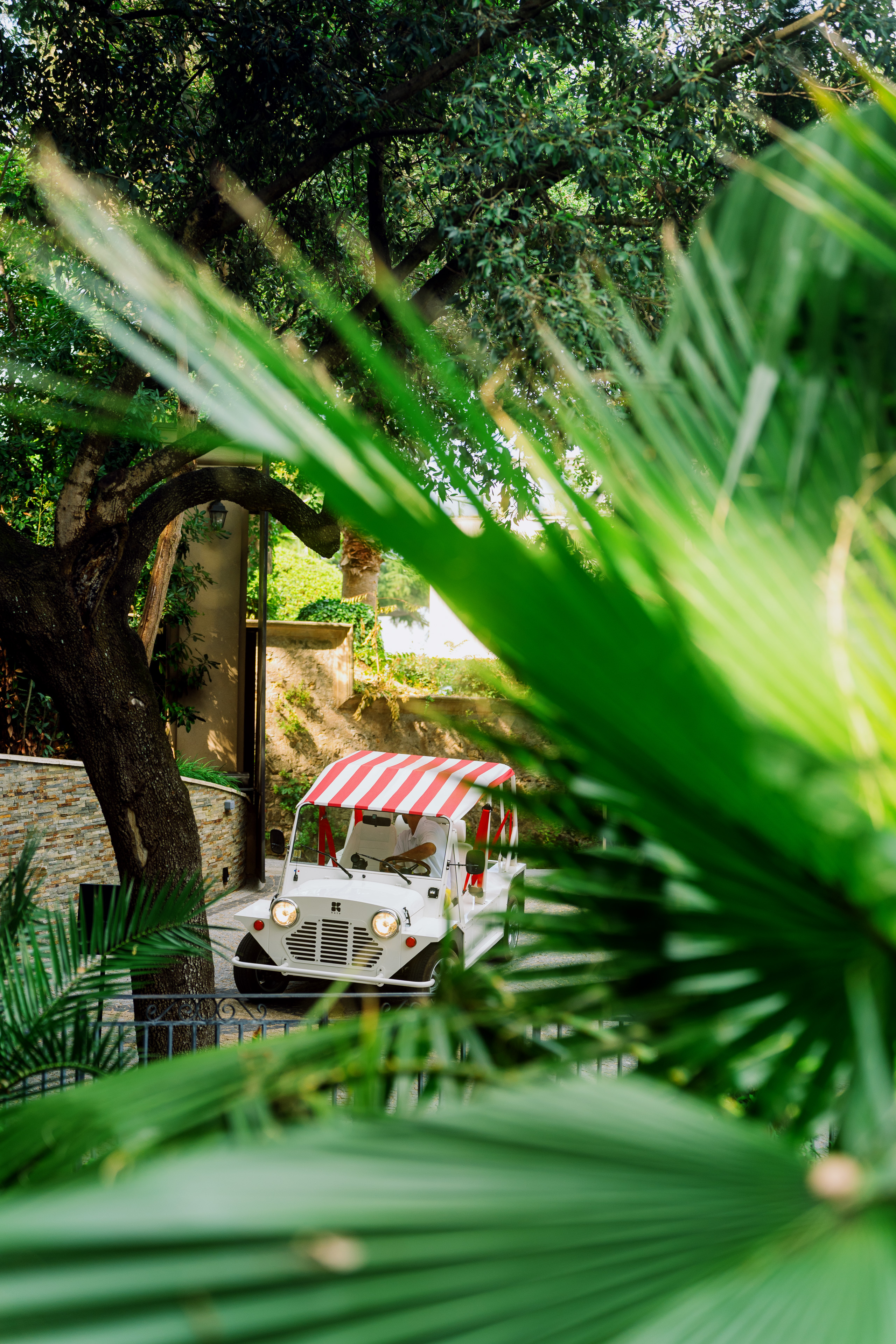
The château, its garden programming, and the on-site shuttle. Photos: Collins.
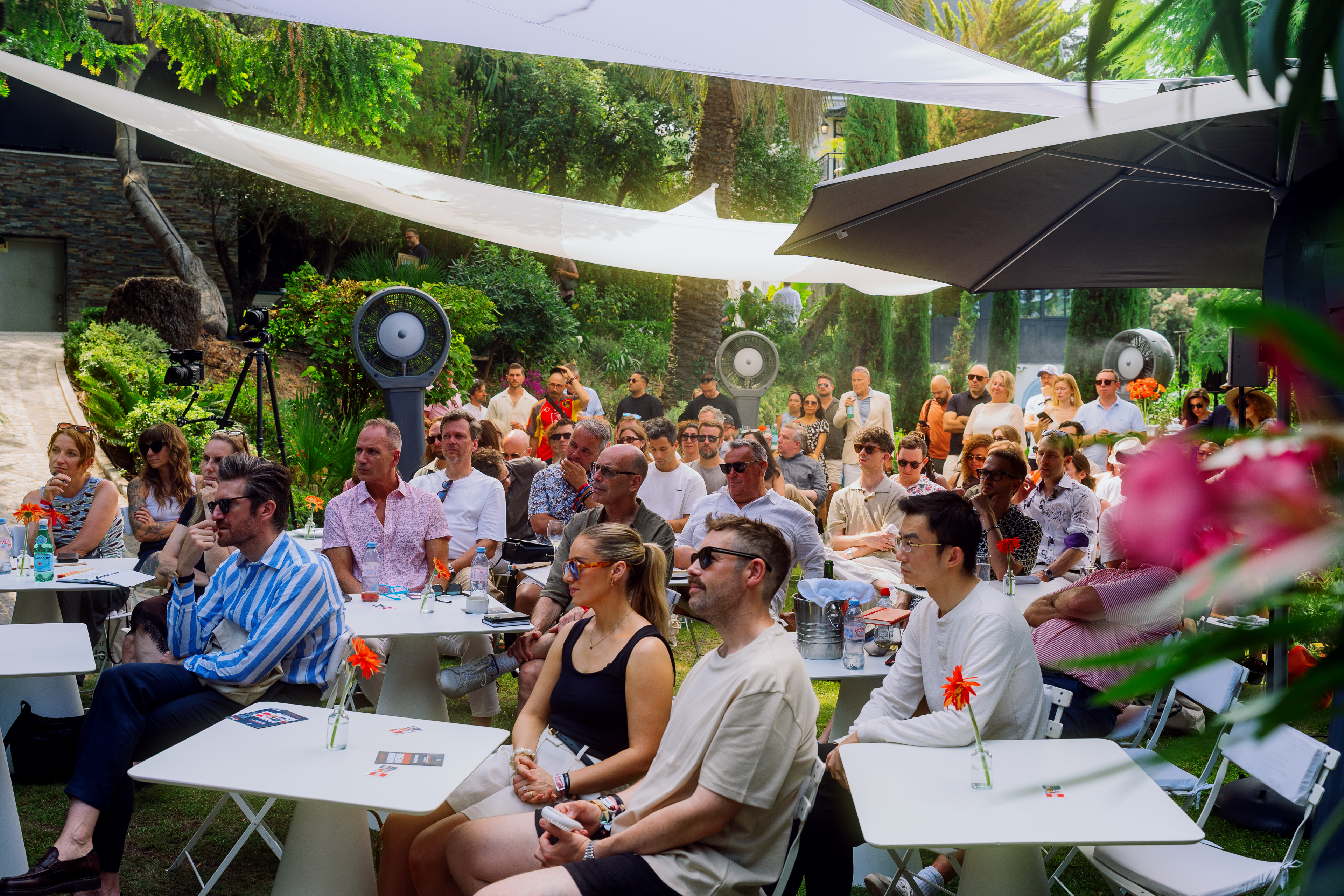
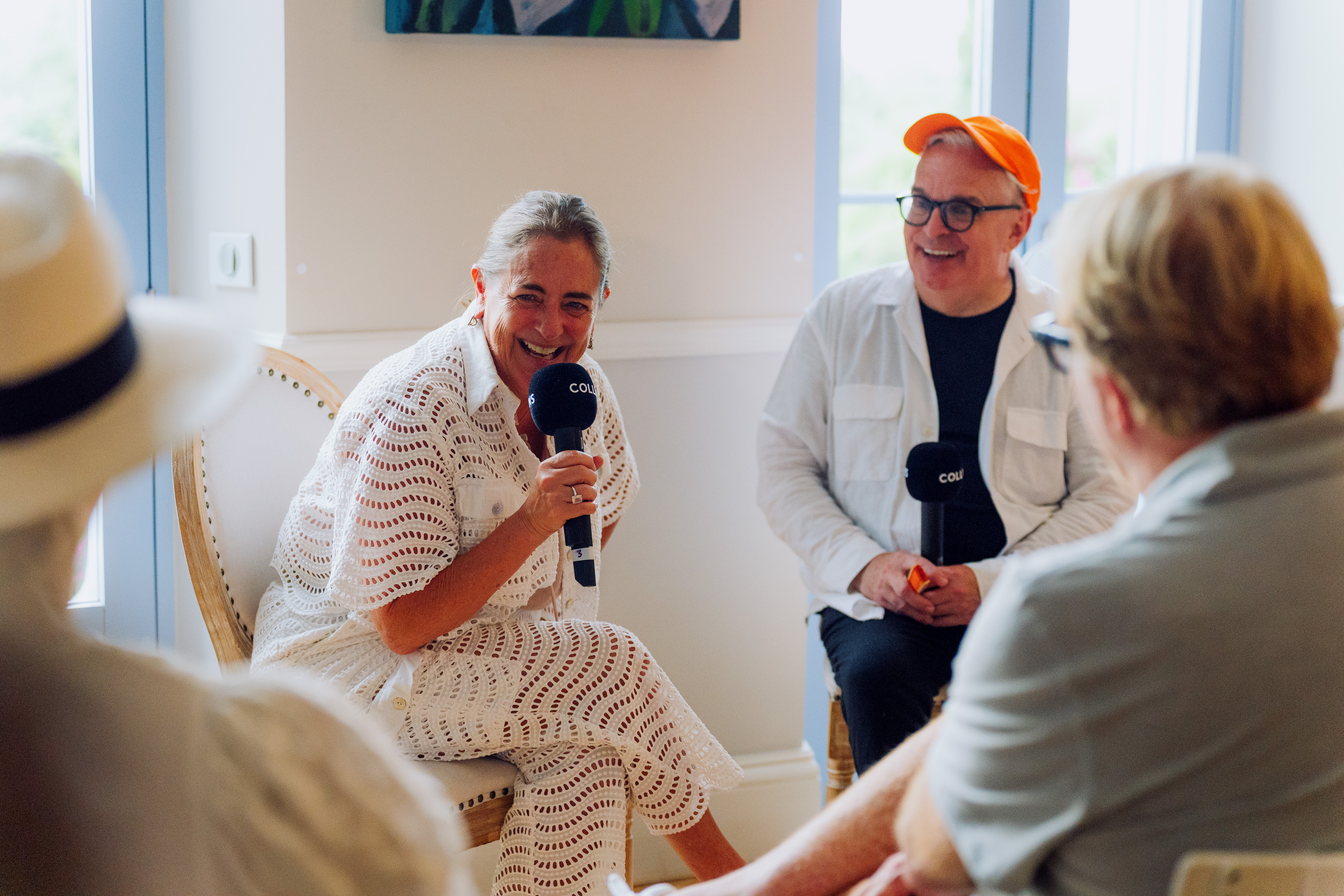
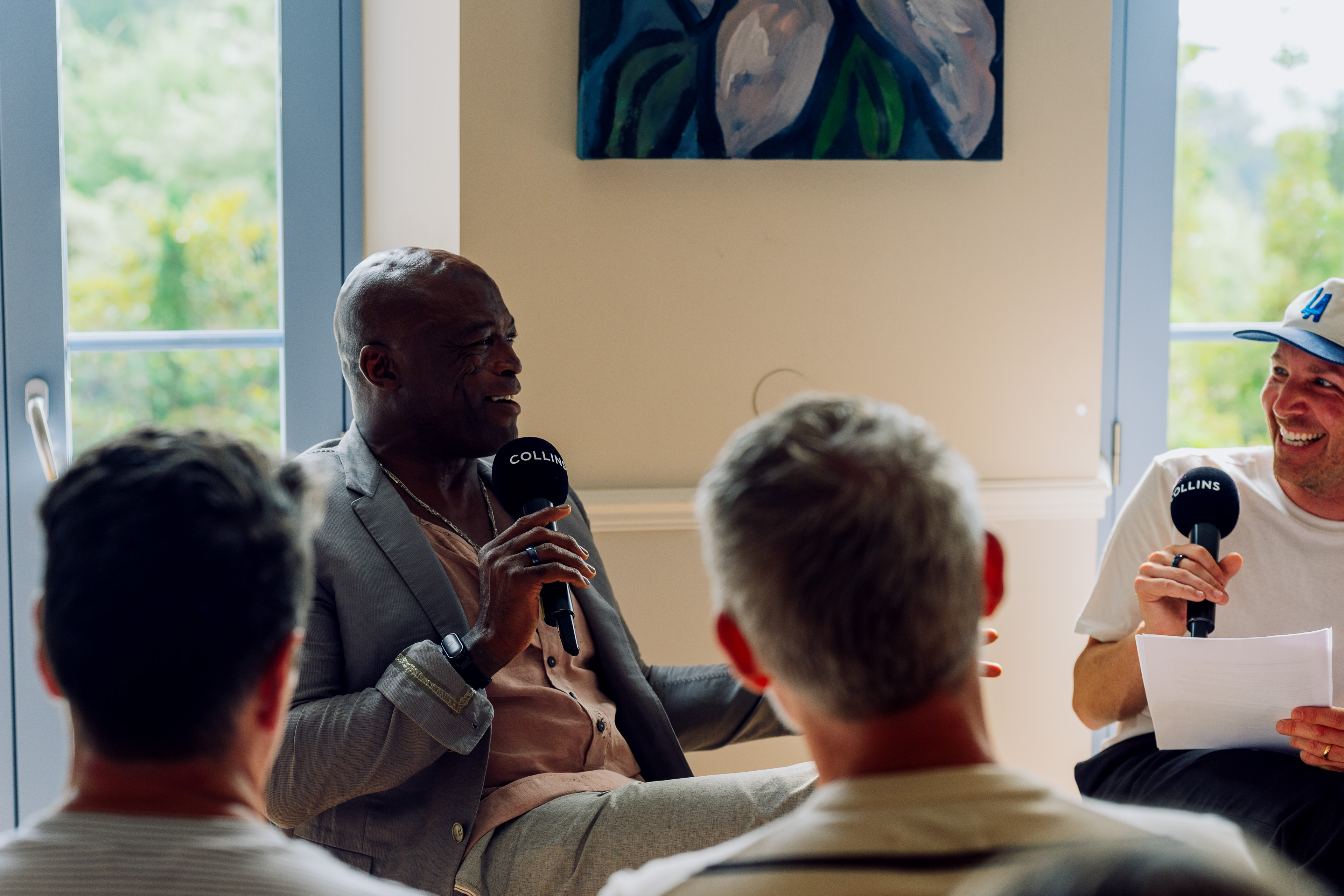
Panel conversations and the poolside reception. Photos: Collins.
Pinterest ManifestivalDefiantly human
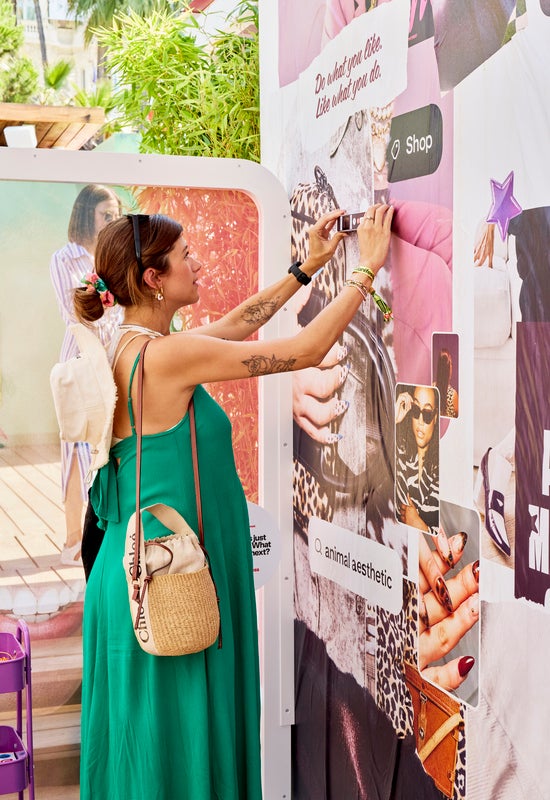
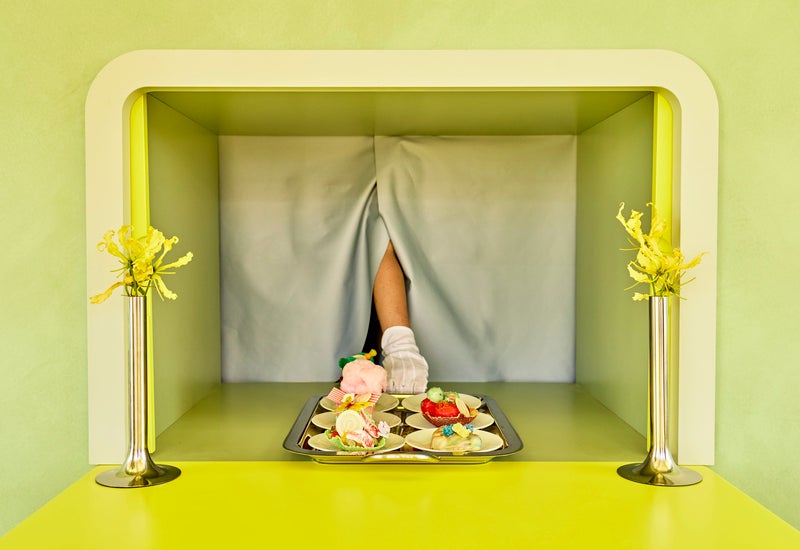
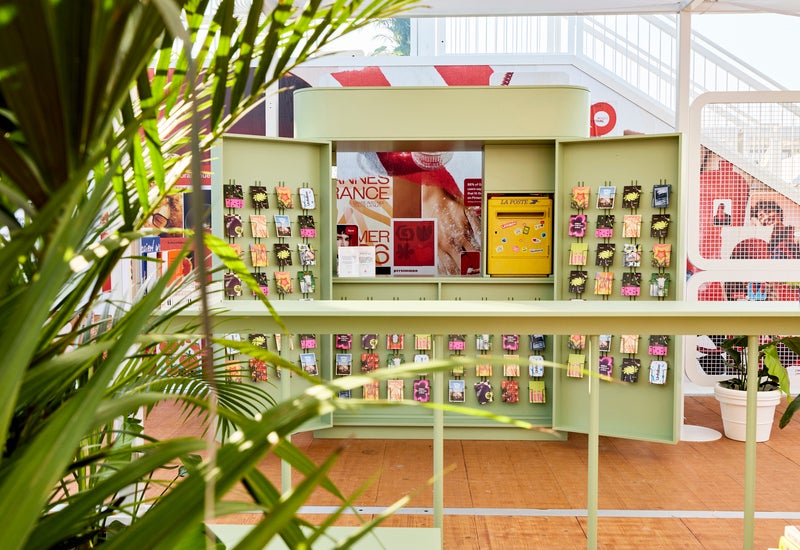
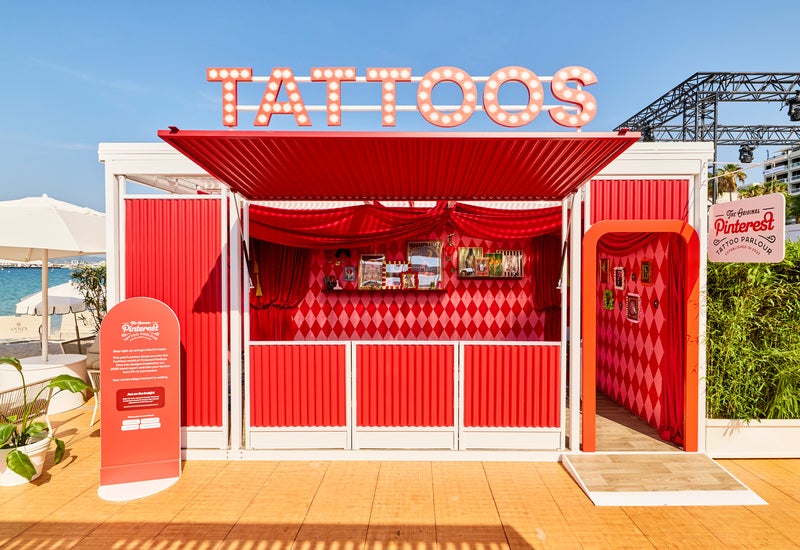
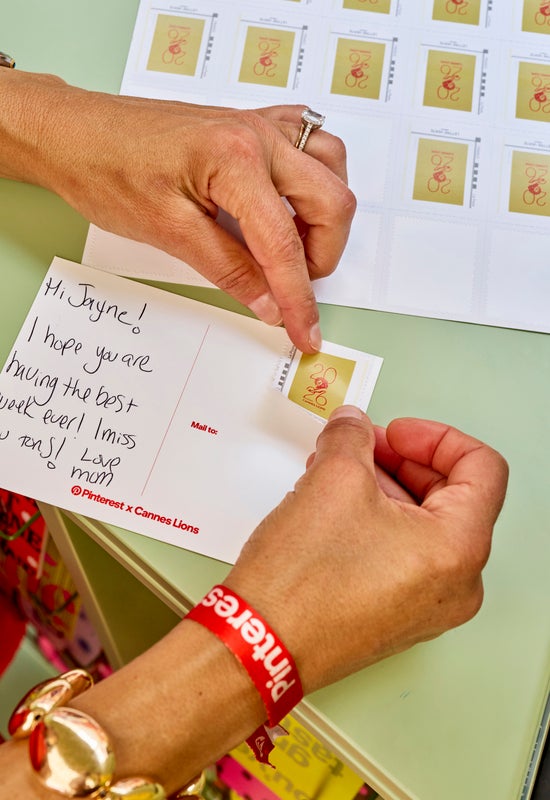
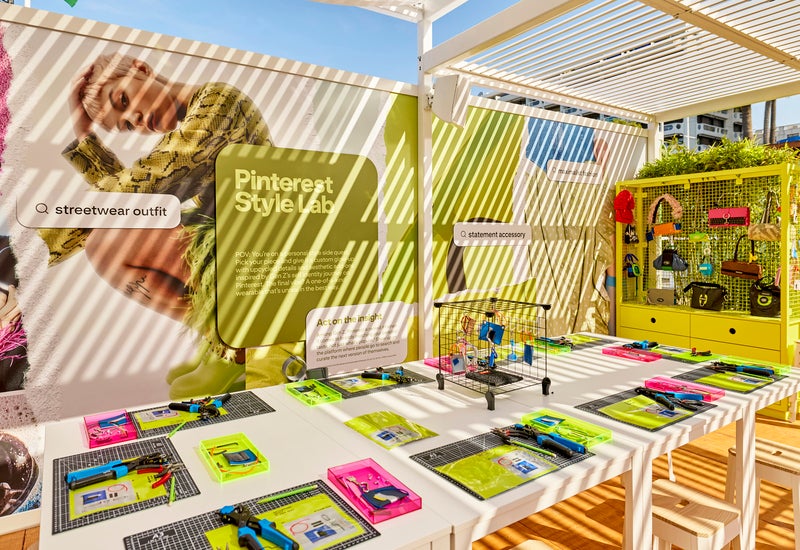
Manifestival came back to the Carlton Beach Club leaning hard into a "Less URL, More IRL" pitch.16 Every interaction resulted in something tangible: a tattoo, a dessert, a personalized accessory, a style discovery, or simply a conversation without a phone in your hand. The experience was designed to transform digital inspiration into physical action. Manifestival wasn't another meeting room box otherwise ruining a perfectly good beach. It was a physical Pinterest board. Tattoos. Pastries. Style labs. Analog crafts. Visual search. Phones literally covered with "Less URL. More IRL." stickers. Every activation asked the same question: What happens after inspiration?
Photos: courtesy of Pinterest, via Event Marketer.16
Scale creates gravity. Taste creates magnetism.
Chapter 3
Creators became infrastructure
Two moves. The second is the one nobody else is writing.
Move one: creators stopped being amplification
Brands used to invite creators in after the fact, just to cover whatever had already happened. That's mostly over. Increasingly, creators are the reason the activation exists at all. They bring the audience, the distribution, the cultural proof, and that, it turns out, is exactly the inventory CMOs are shopping for these days.
Move two: Cannes built for them, and that's the tell
Cannes Lions launched LIONS Creators back in April 2024, and for its first two years it lived on the Palais rooftop, run in partnership with Viral Nation.9 By 2026, the program had graduated: a dedicated beachfront space right behind the Palais, Adobe as headline partner, a full stage, a podcast studio, an editing suite, plus programming that pulled in Steven Bartlett and a Microsoft "Creators Night" featuring Mel Robbins.9 Passes ran somewhere between roughly €1,245 and €1,494, if you were curious what a seat at this particular table costs.
Let's be honest about what this actually is. It's not hospitality. It's a 70-year-old festival building official infrastructure for an entire class of attendee it didn't create in the first place. Which, if you think about it, is a pretty savvy way to absorb a potential competitor before it ever becomes one. By YouTube's own count, more than 500 creators showed up in 2026, up from roughly 400 the year before.2 And yet Cannes Lions still won't say how many creator passes it actually sold. That silence tells you something on its own: an institution that just built a dedicated beach for this exact category, quietly declining to admit how big the category got.
The Film Festival reels
Over and over, both online and on the ground, creators kept saying the same thing: Cannes Lions had become "bigger than the film festival." Don't take that literally, obviously. Take it as a signal instead. Creators are using Lions purely as a status marker, one that has almost nothing to do with advertising itself. The festival's cultural capital is now being spent by people who, frankly, couldn't name a single Grand Prix winner if you asked them. That's genuinely new. And the festival knows it.
@amandamccants, "I don't care if you're hungover, we have to network." A firsthand, comedic read on Cannes networking culture from a creator who was there.
Amanda McCant (@amandamccants, ~1M TikTok followers, WME-signed) attended Cannes Lions 2026 as part of PMG's Creator Spark programming.10 This is Cannes through the creator economy: shown, not summarized.
Chapter 4
What wasn't there
Short chapter. Big signal, though. The most hyped technology of the decade was, somehow, not the festival's visible story this year. Sport, artists, live formats, dinners, rooms: that was the visible economy. AI, meanwhile, shows up in the numbers exactly where you'd expect an infrastructure technology to hide: everywhere in the copy, almost nowhere on the actual marquee.
The read
AI, essentially, went into the plumbing. Technology gets loud when it's still a pitch, and goes quiet the moment it becomes infrastructure. That's just how it works. Adweek's own 2026 coverage called it a "soft takeover": lavish sponsor events, an entire award category of its own, all inside a festival technically built to celebrate human ingenuity.11
The proof, inside our own table
Remember Meta's shift from keynote to demo, back in Chapter 2? That's this exact mechanism, made visible. Stop talking about what AI can do. Just put people inside a product already built on it. A PRovoke Media roundtable caught the same mood from a different angle: "it feels like this is no longer about the big advertising agencies taking over the beach... it's all about the big technology companies propping us up."12
The count
Nobody publishes a clean breakdown of AI-titled keynotes at Cannes, year over year. Not Cannes Lions itself, and as far as we can tell, no trade outlet has tallied it either. So we did it ourselves, using the closest thing available: Propeller Group's full 2025 Cannes events-and-parties list, 1,168 distinct standing activations and scheduled sessions spread across every beach, villa, and venue in town.19 Just 169 of those (14.5%) actually named "AI" in their own title or description. That's a real, counted number, not a guess, and honestly it cuts against the hype from both directions at once. AI shows up in roughly one activation out of every seven, which is hardly nothing. But it's also nowhere near the dominant theme that the outside conversation would have you believe. Most of the week's actual programming (the breakfasts, the panels, the yacht meetings, the endless CMO circles) never mentioned it once. AI is a constant hum underneath the program. It just isn't the program.
The gatekeeping
If you want the clearest proof that AI hasn't actually won the argument at Cannes, look inside the awards themselves. For 2026, Cannes Lions rolled out dedicated AI Craft subcategories across five different Craft Lions (Design, Digital Craft, Film Craft, Industry Craft, Creative Data) and attached a genuinely tough new rule: entries had to prove the work "couldn't exist without" AI, not merely that AI touched it somewhere along the way.20 Digital Craft Lions' AI Craft subcategory ended up shortlisting just 5 finalists. Total. Cannes Lions also made AI-use disclosure mandatory across every single entry this year, a fairly direct response to 2025's biggest scandal, when the Grand Prix for "Efficient Way to Pay" got revoked after its AI-generated case study materials turned out to be, well, fabricated.20
The jurors judging this year's work just said the quiet part out loud, honestly. Rakesh Menon, a 2026 juror for Creative Business Transformation, put it plainly: "Cannes has never been about 'good enough.' ...Craft is not a layer you put on top; it has to be built into the idea itself." Gurbaksh Singh, sitting on the Digital Craft jury, was even more direct: "A lot of work feels similar because AI is often used for speed rather than meaning."20 Put that next to our own 14.5% figure and the picture holds together: AI is everywhere in the sponsor copy and nowhere close to settled in the room where craft actually gets judged. The people gatekeeping creativity at Cannes clearly don't think the technology is where the hype insists it is. And this year, for the first time, they built an actual rule to make everyone prove it.
Chapter 5
The mint and the exchange
The agency chapter. The nuanced version, not the obituary.
Agencies didn't disappear. Let's be clear about that up front. They still win the Lions, which means they still mint the status the entire marketplace trades on. What they actually lost is the conversion layer. Platforms, creators, sport, talent agencies, brand-owned rooms: those are the ones deciding where all that minted status gets spent now. And the holdcos absolutely know it. It's exactly why they're out buying sport properties and talent agencies. They're trying to buy the exchange back, piece by piece.
Our own data backs this up structurally, not just as a vibe. Inside the 1,651 agency and service-firm contacts we identified, agency producers (the people who used to build the deep, patient relationships that actually turned Lions status into production work) are now the smallest functional group on the list. Just 23 contacts. That's 1.4% of all agency contacts we found. Compare that to agency creatives (398), media and platform operators inside agencies (303), or founders and consultants in the agency world (220), all of which dwarf it, easily.
"Thought leadership is slop."
Brian Collins, founder of COLLINS, via Breaking & Entering, Cannes 2026
Filmed by Breaking & Entering at Cannes 2026. Collins' line landed hard enough that attendees started calling out "conference slop" in the comments as its own category.13
Here's the oversupply at Cannes now: content, panels, more content. The actual shortage is judgment: knowing what deserves a room in the first place. And that shortage shows up in the work itself. A Havas New York co-CEO told trade press, bluntly, that a lot of attendees "don't really know what's been entered... don't know the work being talked about."14 The talking got louder, in other words, right as the thing being talked about got thinner.
The Carlton, again. The heroes are still out there somewhere. It's just the room that changed.
Final Chapter
The open position
Not "agencies can own meaning," followed by a tidy capabilities list. Collins' quote already did that chapter's work for us. Let curation be the argument instead.
Platforms own audiences
Distribution at a scale no single brand or agency can replicate on its own.
Creators own distribution
Attention that travels with a person, not a venue or a media buy.
Brands own the real estate
Beaches, villas, budgets: the physical and financial footprint of the week.
The position nobody's claimed yet is curation: deciding which twenty people actually belong in a room, around what premise, and why now rather than some other year. In a market this saturated, that judgment is the genuinely scarce asset. And no beach budget, however large, actually buys it.
The winners of Cannes 2027 won't throw bigger parties. They'll convene better rooms.
When five people are selling to every one buyer, taste is the filter.
THE CROISETTE RATIO · COVER STAT, OPENING STAT, CLOSING LINE
Sources & Notes
Off-Palais programming and villa/beach growth is described qualitatively in trade coverage; we could not source a clean year-over-year count of total activations and have not asserted one. See notes below on the 2018 tech-beach takeover and Sport Beach's 2022–2023 launch as the clearest dated anchors.
Video source: Instagram, @breakingandenteringmedia, filmed with Brian Collins at Cannes 2026. Exact on-camera wording per the linked clip; audience reaction in comments ("slop is kind of a hilarious perfect wording," "adding conference slop to my lexicon") corroborates the line's reception on the ground.
An earlier draft attributed a "no one is talking about the work" line to journalist Jeff Beer; we could not independently source that exact quote and have removed it per this report's own sourcing rule. In its place: a comparably sourced observation from Havas New York leadership on attendees not knowing the work being discussed, cited in 2026 Cannes trade coverage.
Vio Zhu, "Interactive Experiences @ Cannes Lions 2026," hyz studio, July 2026. Firsthand account, photography, and video of Google Creative House's Genie 3 installation, the Meta Interactive Room, and Reddit Deli (café, freezer activation, NFC community wall). The two Genie 3 demo clips embedded in Chapter 2 are hosted on YouTube by the author.
Kait Shea, "Cannes Lions 2026, Part 1: Microsoft's Gardens, Reddit's Deli, Amazon's Port and More," Event Marketer, June 26, 2026. Source for Amazon Port program detail and photos, and for the Reddit Community Deli's two-story layout, deli menu, Sweet Success aisle, Conversation Studio, and closing-gift detail (video embedded in Chapter 2 is hosted on YouTube by Event Marketer).
Steve Madden, "Live from Cannes Lions 2026," MM+M. Aerial photo credit: Cannes Lions International Festival of Creativity / Press Portal, Thomas Niedermueller/Getty Images for Cannes Lions.
Analysis of the Propeller Group's "Cannes Lions 2025 events and parties list" (1,168 distinct listed activations and sessions): 169, or 14.5%, explicitly name "AI" in their own title or description. Spreadsheet compiled by Propeller Group (propellergroup.com); analysis by Hustle. This is 2025 data (the most recent full event-and-party list available in this format) used as a proxy for the density of AI language in off-Palais sponsor copy; not asserted as a 2026 figure.
Hustle proprietary data: an 8,023-person intercept survey conducted by eighteen trained interviewers stationed across ten locations during Cannes Lions week 2026: the Palais entrance, Meta Beach, Sport Beach, RTL Beach, the Gutter Bar area, the Carlton, the Martinez, Google Beach, TikTok Beach, and LinkedIn Beach. Full methodology available on request.
Program detail (Wellness Oasis rooftop, penthouse creator zones and Adobe Edit Bar, The Daily Brief morning show, Crane Club Privé with Tao Group Hospitality) and quotes from Danielle Damiano Medeiros, head of industry tentpole experiences at LinkedIn, per "Cannes Lions 2026: Top Events and Activations," BizBash. The activation was produced by The Bait Shoppe, who supplied the photos and GIF used in this section directly.
Methodology note. This is an intercept survey, the old-fashioned kind, done by actual humans standing in actual heat. Eighteen trained interviewers worked ten locations all week: the Palais entrance, Meta Beach, Sport Beach, RTL Beach, the Gutter Bar area, the Carlton, the Martinez, Google Beach, TikTok Beach, LinkedIn Beach. Every one of the 8,023 people they stopped got coded, by title and function, into one of five buckets: seller-side, likely buyer, influencer, non-buyer, or genuinely unclear. Everything else in this report you could, in theory, reconstruct from trade coverage if you had the patience. This ratio, you couldn't. It's the one number here that's actually ours.